

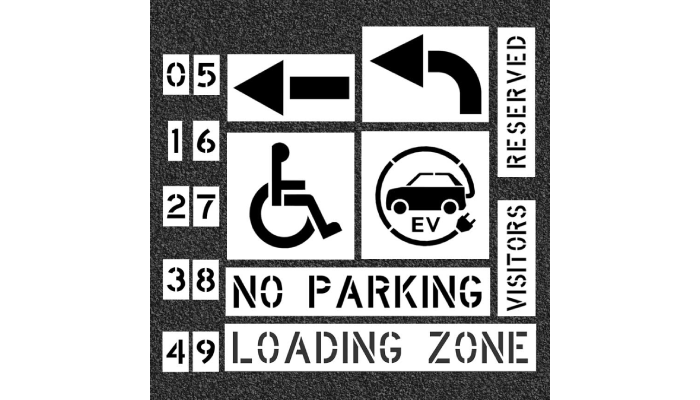
In 2025, customizable parking lot stencils remain essential for professional pavement marking by providing accuracy, durability, and compliance with regulations like ADA and DOT. Made mostly from materials such as LDPE and UHMW, these stencils resist wear and paint buildup while maintaining their shape over time. Precision laser cutting allows detailed customization including logos, various font sizes, and multi-language text catering to retail branding or municipal rules. Leading suppliers offer easy online ordering with expert support to ensure proper sizing and compliance. Proper cleaning and storage practices extend stencil life. Innovations continue improving materials and design tools to meet evolving needs like EV parking space markings.
Overview of Customizable Parking Lot Stencils in 2025
Customizable parking lot stencils remain vital tools for professionals aiming to create clear, consistent, and regulation-compliant pavement markings. In 2025, these stencils go beyond basic shapes and letters, offering extensive customization to meet diverse needs, from retail branding to municipal requirements. Manufacturers now use advanced materials and precise laser cutting to ensure stencils hold their shape and sharpness through repeated use, which helps maintain clean lines and reduces paint bleed. Complex graphics, multi-language text, and specific sizing have become standard options, allowing contractors to tailor markings for unique project demands. The ability to incorporate logos and specialized symbols supports both branding efforts and regulatory compliance without compromise. Reusability is a key feature, helping contractors reduce waste and improve job efficiency. Additionally, adjustable stencil thickness and edge design contribute to better paint control, ensuring markings are professional and durable. Digital design platforms streamline the collaboration process, letting users preview and approve stencil layouts before production, which speeds up delivery times. These stencils are also designed with compliance in mind, adhering to federal and local standards to avoid costly mistakes. Looking ahead, the stencil market is evolving to address new parking challenges, including spaces for electric vehicles and micromobility, reflecting the changing landscape of transportation and parking management.
Materials Used for Durable Parking Lot Stencils
Low-Density Polyethylene (LDPE) is the go-to material for parking lot stencils because it strikes a good balance between flexibility and toughness. Its durability and resistance to paint buildup make it a reliable choice for repeated use on asphalt and concrete surfaces. This means professionals can reuse LDPE stencils multiple times without losing sharp edges or stencil shape, ensuring consistent and clear pavement markings.
For more demanding environments, Ultra-High-Molecular-Weight Polyethylene (UHMW) steps up as a premium option. UHMW offers superior toughness and longevity, making it ideal for heavy-duty applications where stencils face harsh conditions or frequent use. Both LDPE and UHMW resist warping and cracking even under temperature fluctuations, which helps maintain stencil integrity over time.
Cleaning these materials is straightforward, as they tolerate solvents and gentle scrubbing with soft brushes. This easy maintenance prevents paint buildup that can blur stencil lines or distort the design. Material thickness is carefully chosen to provide enough rigidity for precise placement while still allowing some flexibility to conform to slightly uneven pavement.
Advanced Manufacturing and Customization Techniques
Laser cutting has become the go-to method for producing parking lot stencils in 2025, offering precise, clean edges that reduce the risk of paint bleeding and ensure crisp markings. This technology supports intricate designs, allowing stencils to include complex logos, multi-language text, and exact sizing tailored to specific project needs. Customers benefit from flexible design options through user-friendly online tools or direct collaboration with manufacturers via phone, enabling them to proof and adjust stencil layouts before production. Customizable features now extend to font size, stencil thickness, and the choice to add borders or backgrounds, helping meet ADA, DOT, and local regulations effectively. Quick turnaround times in manufacturing support contractors working under tight schedules, while digital proofs and sample cuts help catch errors early and maintain high quality. The cutting technology balances fine detail with durability, ensuring even small or detailed stencils hold up during repeated use. Beyond single stencils, manufacturers offer kits combining multiple stencil types for complete pavement marking solutions. Ongoing input from field professionals drives improvements in stencil design, durability, and usability, making these tools more reliable and easier to work with on the job.
Categories and Common Uses of Parking Lot Stencils
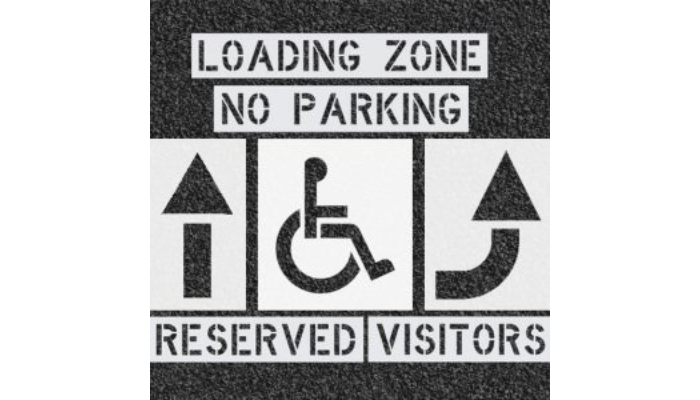
Parking lot stencils come in several key categories, each serving distinct purposes to improve safety, compliance, and branding. Alphabet and number kits are popular for marking reserved spots or numbering spaces, offering reusable letters and digits that make customization easy. Arrow stencils, including straight, curved, and turn arrows, guide vehicle flow efficiently in lots and garages, helping prevent confusion and accidents. Handicap stencils comply with ADA requirements and come in various sizes, often with borders or backgrounds to enhance visibility for accessible parking. Retail stencils stand out by allowing businesses to imprint logos and branded messages, ensuring a consistent look across multiple store locations. Wording stencils cover essential messages like “Fire Lane,” “Loading Zone,” or “Visitors,” clearly communicating parking rules to drivers. Custom stencils address unique needs such as special logos, unusual dimensions, or local regulations, offering tailored solutions for complex projects. Some stencil sets combine these categories, providing comprehensive marking options in a single purchase. Arrow and symbol stencils are frequently used in municipal and industrial settings to enforce traffic patterns and safety standards. Meanwhile, retail and commercial property managers rely on custom stencils to boost brand identity while maintaining regulatory compliance. Specialty stencils are also gaining traction for emerging parking types, like electric vehicle charging spaces, reflecting the evolving demands of modern parking lots.
Market Trends Shaping Stencil Demand in 2025
In 2025, the demand for customizable parking lot stencils is shaped by several key market trends. As safety standards tighten and regulations become more strict, durable and reusable stencils are increasingly valued for their long lifespan and cost-effectiveness. Retail chains push for consistent branding across multiple sites, leading to a rise in custom logo stencils that maintain uniformity in parking lot markings. Professional striping companies focus on precision tools that minimize paint waste and reduce rework, helping lower labor costs and improve efficiency. Another important trend is the integration of stencil suppliers with pavement marking paint and equipment manufacturers, providing contractors with convenient all-in-one solutions. The growing number of electric vehicle charging stations creates a need for specialized stencil designs that clearly mark EV parking spots. Additionally, municipalities updating infrastructure to support micromobility lanes require new stencil types to accommodate bicycles and scooters. Digital platforms for ordering and customizing stencils have sped up design and procurement, responding to contractor demands for faster turnaround and flexibility. Sustainability also plays a role as eco-conscious choices in stencil materials and reusability help reduce environmental impact. The steady growth of commercial real estate development keeps demand strong for both compliant and customized stencils. Advances in laser cutting and material technology allow stencil manufacturers to offer higher volume runs and a wider range of product options, catering to diverse markets and evolving parking lot needs.
Best Practices for Stencil Maintenance and Longevity
To keep customizable parking lot stencils in good condition, clean them immediately after use with the right solvents and soft brushes. This prevents paint buildup that can blur edges and affect marking accuracy. After cleaning, make sure stencils are fully dry before storing them to avoid mold or material breakdown. Store stencils flat or upright in cool, dry places to prevent warping, cracking, or fading over time. Avoid bending or folding the stencils during storage or transport since this can damage their shape and precision. Using recommended cleaning products helps preserve the stencil material’s flexibility and durability. Regularly inspect stencils for signs of wear, especially along edges, and replace them promptly when they become worn to ensure markings stay sharp and clear. Labeling and organizing stencil sets reduces unnecessary handling and wear, which extends their lifespan. Training staff on proper stencil handling, cleaning, and storage techniques supports consistent stencil performance and reduces replacement costs. Following these maintenance practices helps maintain stencil sharpness and readability, which is essential for producing professional, compliant pavement markings consistently.
Top Suppliers and Their Service Offerings
Several key suppliers dominate the market for customizable parking lot stencils in 2025, each offering unique advantages tailored to professional pavement marking needs. 1-800-Stencil, a division of RAE Products & Chemicals Corporation, stands out with an extensive product range that includes DOT-compliant customizable stencils. Their expert customer service and customization support help professionals meet specific project requirements, from unique sizing to complex logo integration. Asphalt Kingdom focuses on LDPE stencils known for durability and flexibility, providing fast shipping and kits designed for both contractors and DIY users. Their products meet DOT, FHWA, and MUTCD standards, making them a reliable choice for government and commercial projects. Other suppliers such as StencilFast and Transline Industries also provide customizable options that cater to professional demands, including tailored stencil thickness and precise digital proofing services to ensure accuracy before production. Most leading suppliers prioritize user-friendly online ordering platforms, backed by responsive technical support teams that guide customers in selecting the correct stencil size, material, and compliant designs. Fast delivery and well-stocked inventories are common features, supporting contractors working under tight timelines. Additionally, many suppliers bundle stencils with related marking tools and paints, offering a convenient one-stop solution. Warranty and replacement policies usually cover defects and durability issues, giving users added confidence in their investment. Overall, these suppliers continue to evolve their offerings to keep pace with changing regulations and emerging parking lot marking trends, such as EV charging station symbols and updated accessibility markings.
Innovations Driving the Future of Parking Lot Stencils
Advances in laser cutting technology are shaping the next generation of parking lot stencils by producing sharper, more detailed edges that resist wear and reduce paint bleed. This means markings stay cleaner and last longer, even with frequent use. Digital design tools have streamlined the customization process, allowing for quicker creation, proofing, and adjustments, cutting down the time between order and delivery. New stencil materials are emerging, offering better chemical resistance and flexibility while focusing on environmental sustainability. For example, some manufacturers are developing recyclable and reusable options to lower the ecological footprint. Stencil designs themselves are evolving to meet the demands of modern parking lots, now including symbols for electric vehicle charging stations and micromobility lanes, which reflect shifting transportation trends. Looking ahead, integration with smart parking systems could see stencils incorporating QR codes or embedded sensors to interact with digital platforms. On the paint side, innovations complement stencil durability by improving adhesion and reducing fading, ensuring markings stay visible longer. To simplify work for contractors, some suppliers offer combined stencil and equipment kits, which streamline the pavement marking process. Additionally, augmented reality tools are being explored to help with precise stencil placement on-site, reducing errors and speeding up installation. Continuous collaboration between manufacturers and users drives ongoing enhancements, ensuring stencils meet practical needs while adapting to new technologies and regulations.
Resource URL:
https://en.wikipedia.org/wiki/Raised_pavement_marker
https://roadly.ca/product/parking-lot-stencil-kit-pro/

Donald Mabry was born in New Jersey, Studied at Drew University. Currently working as Author at YoungMontana, Donald Mabry helps readers learn the Bussiness, Construction, Health, Law hone their skills, and find their unique voice so they can stand out from the crowd.