

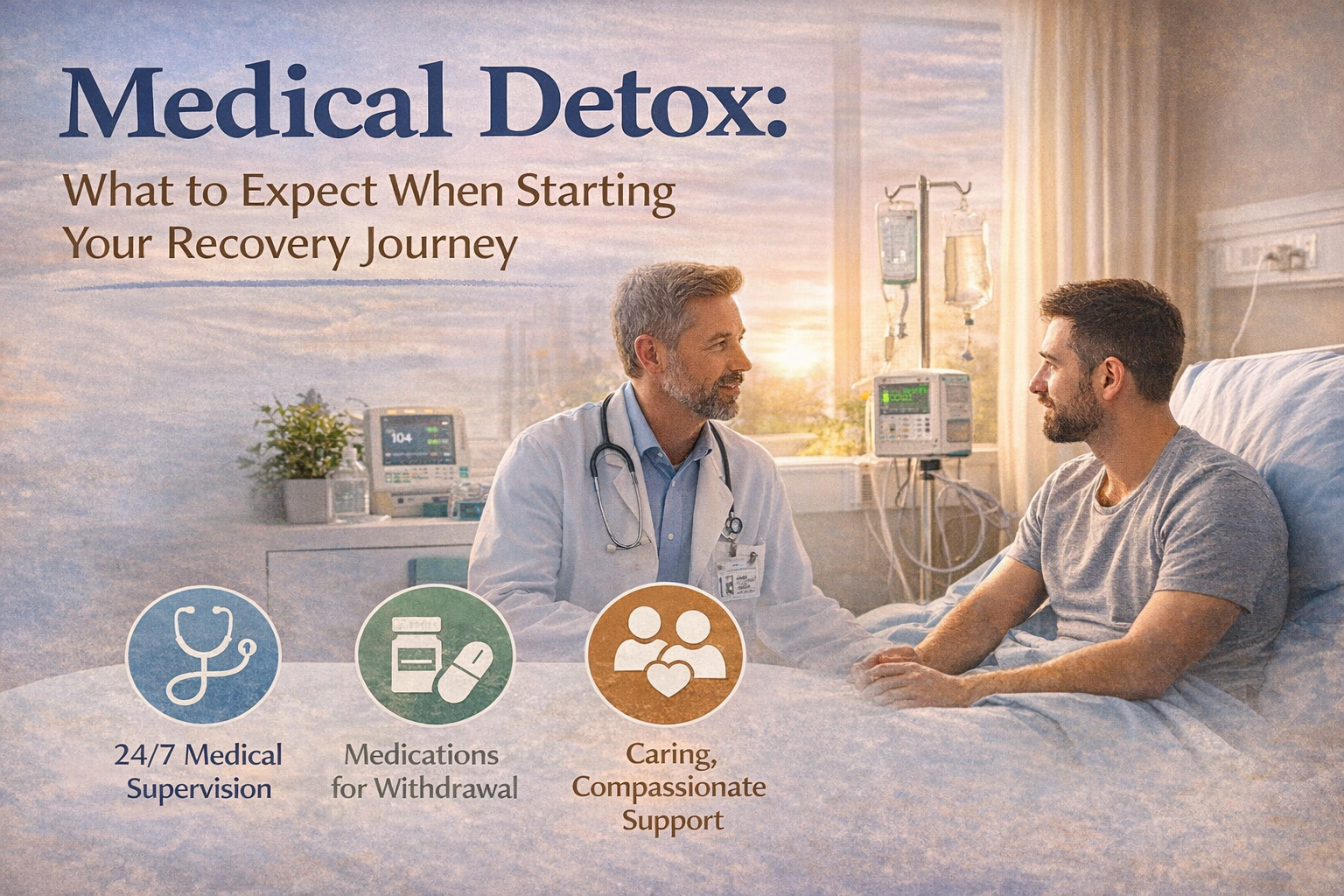
Medical Detox: What to Expect When Starting Your Recovery Journey
For many people, the thought of detoxification is one of the greatest sources of fear when considering addiction treatment. Withdrawal from drugs or alcohol can be deeply uncomfortable, and in some cases medically serious. Understanding what the detox process actually involves — and why medical supervision is so important — can help ease anxiety and support the decision to seek help.
What Is Medical Detox?
Medical detox is the process of allowing the body to clear itself of addictive substances under close clinical supervision. Unlike attempting to quit “cold turkey” at home, medically supervised detox provides a safe, controlled environment where healthcare professionals monitor vital signs, administer medications to manage withdrawal symptoms, and intervene immediately if complications arise.
The duration of detox varies depending on the substance involved, the severity of dependency, the client’s overall health, and whether multiple substances are present. Alcohol detox may take 5–10 days, while opioid detox can range from a few days to several weeks. The goal of detox is not simply abstinence — it is stabilization that prepares the client for the next phase of their recovery journey.
Common Withdrawal Symptoms
Withdrawal symptoms vary significantly by substance. Alcohol withdrawal can cause tremors, sweating, anxiety, nausea, and in severe cases, seizures and delirium tremens. Opioid withdrawal produces flu-like symptoms including muscle aches, insomnia, gastrointestinal distress, and intense cravings. Benzodiazepine withdrawal carries similar risks to alcohol withdrawal and requires careful medical management.
Stimulant withdrawal, while generally less physically dangerous, causes profound fatigue, depression, and cognitive difficulties. All of these experiences are significantly more manageable with professional medical support than alone at home.
Medications Used in Detox
Modern medical detox makes extensive use of medications to reduce the severity of withdrawal symptoms and minimize medical risks. For alcohol detox, benzodiazepines are commonly used to prevent seizures and manage anxiety. For opioid detox, medications such as buprenorphine or methadone can ease withdrawal symptoms and support stabilization. Anti-nausea medications, sleep aids, and blood pressure medications may also be used to keep clients comfortable.
Individuals seeking a medical detox center in Los Angeles should look for programs that offer individualized medication protocols managed by experienced physicians who specialize in addiction medicine.
Detox Is the Beginning, Not the End
It is crucial to understand that detox alone is not addiction treatment. Completing detox means the body has cleared the substance, but the psychological, behavioral, and social dimensions of addiction require intensive therapeutic work. Transitioning directly from detox into a residential or intensive outpatient treatment program dramatically improves long-term recovery outcomes.
Accessing safe detoxification and withdrawal management programs that seamlessly connect clients to ongoing therapeutic care is essential for lasting recovery. iRely Recovery in Los Angeles provides medically supervised detox followed by evidence-based residential treatment, ensuring a smooth continuum of care from the first day of sobriety through long-term aftercare support.

Donald Mabry was born in New Jersey, Studied at Drew University. Currently working as Author at YoungMontana, Donald Mabry helps readers learn the Bussiness, Construction, Health, Law hone their skills, and find their unique voice so they can stand out from the crowd.